Three Municipalities in Călărași District Launch Accessible Minibus Service for Passengers with Reduced Mobility
Swiss-Style Intermunicipal Transport: How Three Villages in Moldova Solved the Mobility Challenge
On June 12, 2026, Călărași hosted the launch of the upgraded intermunicipal transport service connecting Călărași, Tuzara, and Nișcani.
The initiative, implemented with financial support from Switzerland and uniting the efforts of three local administrations, aims to provide quality mobility for about 12,000 residents of the region, who previously had to rely on random rides or expensive taxis.
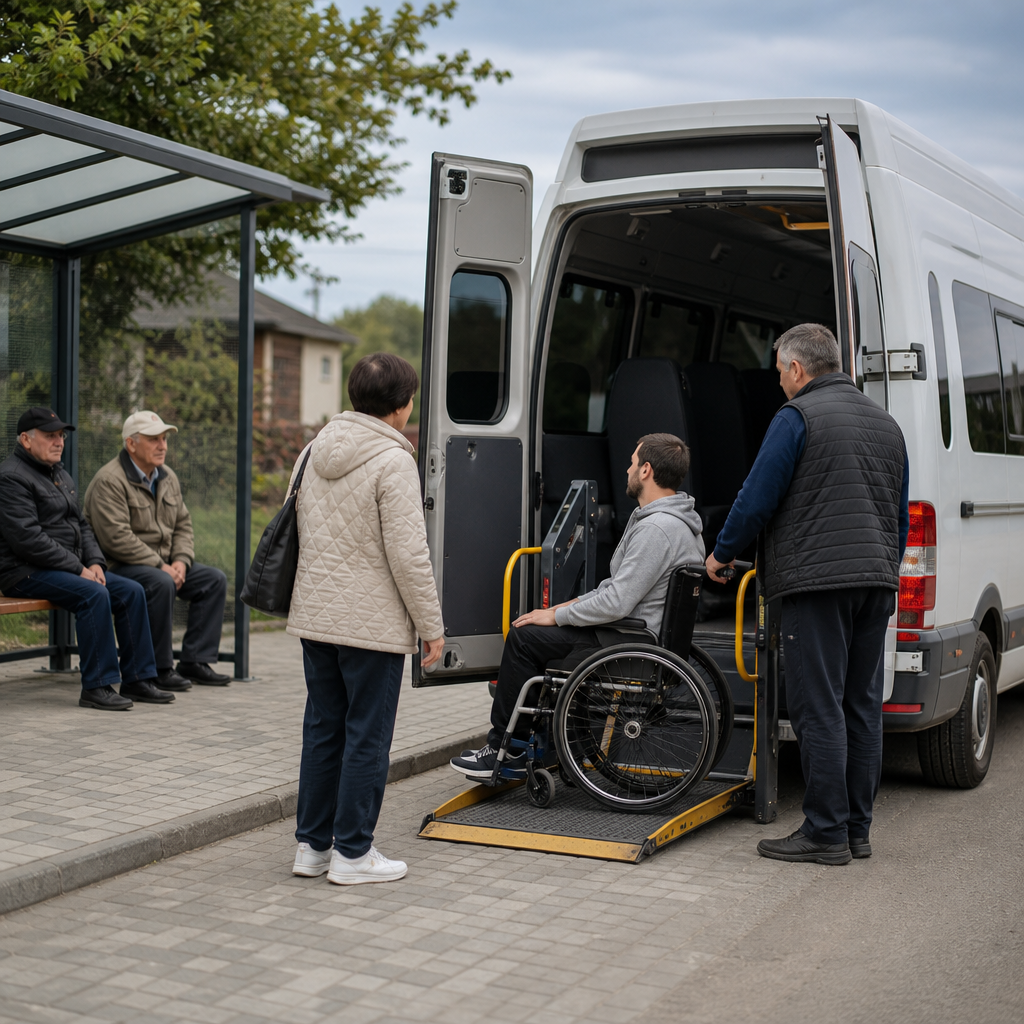
The funding allowed for the purchase of four new minibuses, one of which is equipped for passengers with disabilities. In parallel, 2.3 kilometers of road surface and sidewalks were reconstructed, and 14 bus shelters were built. The route network covers six directions connecting Călărași with Nișcani, Tuzara, Novaci, and Seliștea Nouă. The fare is fixed at 8 lei, and passengers can pay in cash, via QR code, or by SMS.
From a Transport Vacuum to Partnership
The need for reform arose due to a chronic shortage of transport services. While Nișcani previously had only three minibuses running at specific times of the day, Tuzara was left entirely without public transport for three decades.
Legislative Barriers and the Voice of Citizens
Launching the route required not only administrative agreements but also changes to Moldova's national legislation. Since the current Transport Code did not allow the Călărași municipal enterprise to operate outside its jurisdiction, the initiators had to push for parliamentary amendments that legalized route management based on a tripartite agreement, under which the service would be administered by the local municipal enterprise. At the same time, key decisions were made based on the residents' opinions. Engaged experts conducted a feasibility study, and mass surveys revealed a demand for safe and comfortable transport with air conditioning.
Social Impact and Future Plans
According to Mathias Morgner, head of the project team for 'MĂ IMPLIC', the new transport is critical for the daily commuting of workers and students.
Local residents note radical changes: if a taxi ride from Călărași to Nișcani previously cost 70-80 lei, now people can freely plan visits to doctors and public institutions, blurring the line between urban and rural comfort.
Patrick Etienne, a representative of the Swiss Cooperation Office, emphasized that the true value of the initiative lies not only in the purchased buses but also in the investments in decision-making processes and building trust between the authorities and the public.
The successful experience of the Călărași district paves the way for scaling up. Amid the ongoing process of municipal consolidation in Moldova, the model of joint transport management could serve as an example for other regions. The initiators themselves have confirmed their readiness to replicate their practices across the country, proving that pooling resources and active citizen participation can transform even the most neglected areas of public life.
Who is affected
Только один из четырех микроавтобусов доступен для маломобильных граждан, что создает барьер ожидания и требует синхронизации графиков.