“Nothing is impossible”: How a blind swimmer conquered the 8.2-mile Mackinac Island loop and changed perceptions of disability
Society imposes unjustified limitations on people with disabilities.
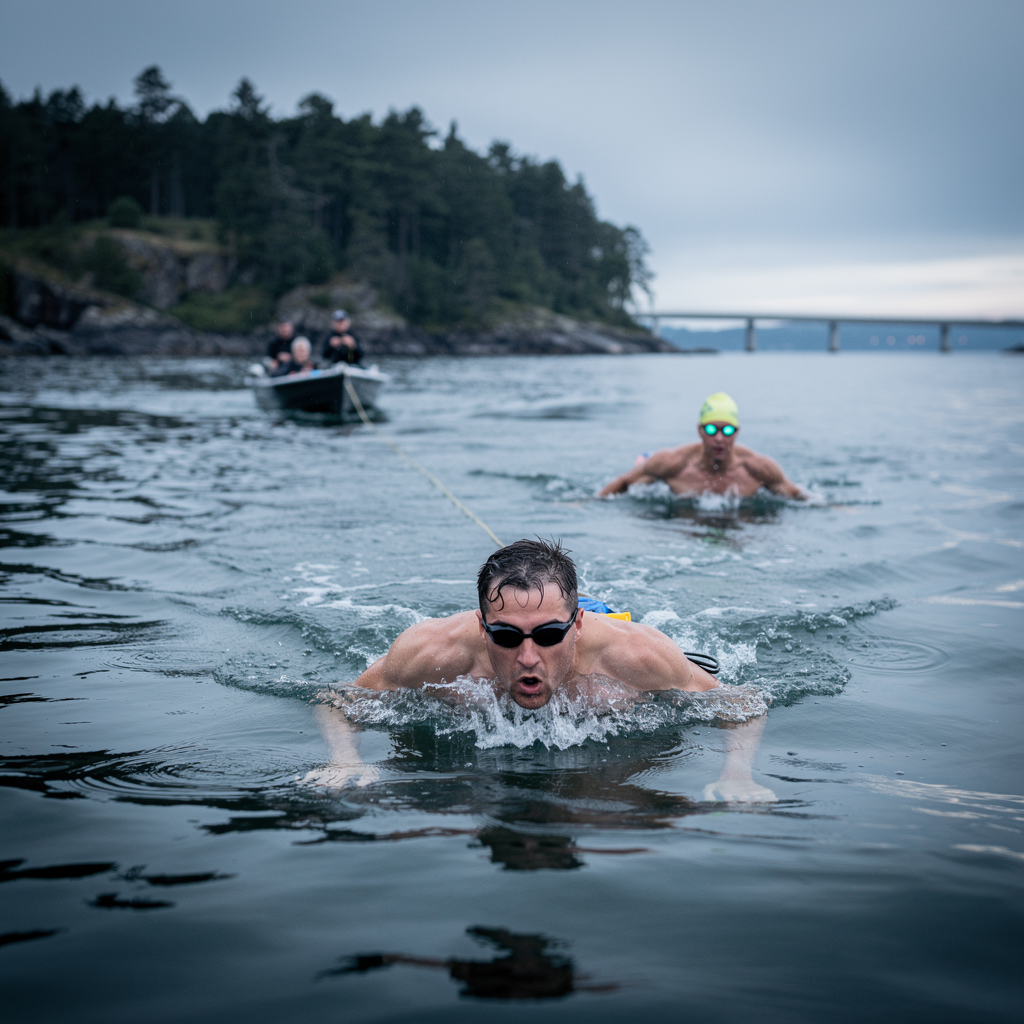
43-year-old Scott Lacey from Kalamazoo, Michigan, USA, has made history as the first known blind athlete to successfully swim around Mackinac Island.
By completing the 8.2-mile open-water distance in over nine hours, he clearly demonstrated that physical limitations are not a barrier to achieving extreme athletic goals.
This impressive swim was the result of months of meticulous preparation, the development of individual assistive solutions, and incredible personal determination. Lacey’s path to this record was marked by serious life challenges. Born with hydrocephalus, he underwent shunt surgery in early childhood and led an active lifestyle, successfully participating in school sports. However, at age 26, a sudden shunt failure caused pressure inside his skull to lead to irreversible vision loss within just a few hours. Since then, he has undergone more than twenty complex brain surgeries, not to mention the early loss of both parents and a devastating fire at his family home. Despite the severity of these circumstances, Lacey refuses to focus on what has been lost, concentrating solely on what can still be done and how to adapt his plans to new realities. To successfully and safely complete the distance, the athlete used an innovative approach. He developed a special tether system connecting him to a guide swimmer, which allowed him to navigate clearly in open water and synchronize movements. Notably, modern technologies, including AI-based tools, helped him create and refine this system. Lacey himself emphasizes that he does not want to be perceived merely as an object for inspiration or pity. His main goal is to fundamentally change public expectations. He believes that society should assume that people with disabilities are capable of achieving the same goals as everyone else; they simply sometimes require slightly different tools or approaches to solving tasks.
Who is affected
Слова «невозможного не существует» должна подкрепляться реальной, работающей инфраструктурой, которая позволяет людям с разными формами инвалидности самостоятельно выбирать свои цели, получать необходимые инструменты и достигать желаемого без чрезмерных барьеров.