EU Presidencies Agree on Joint Declaration for the 20th Anniversary of the UN Convention
The EU reviews 20 years of the Convention on the Rights of Persons with Disabilities.
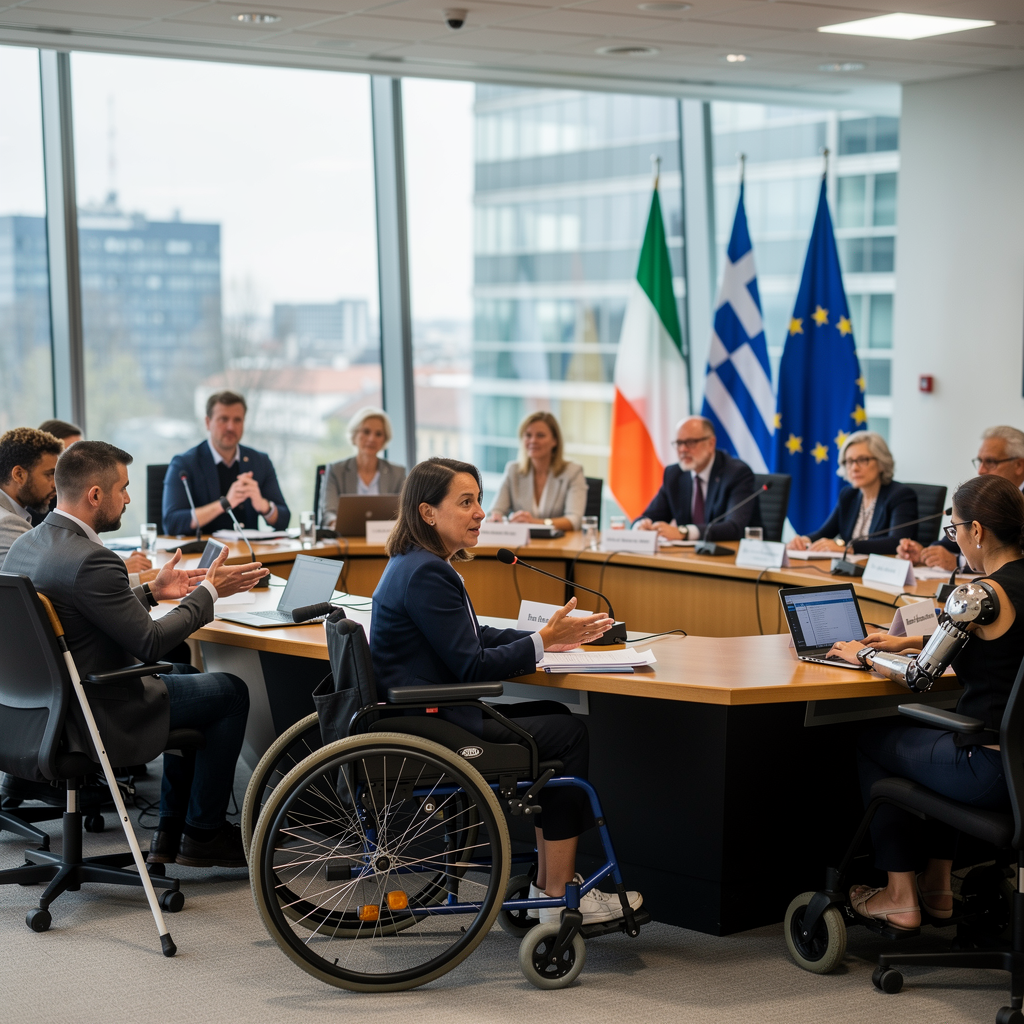
Ireland, Lithuania, and Greece, holding the Council of the EU presidency, held a high-level meeting marking the 20th anniversary of the UN Convention on the Rights of Persons with Disabilities.
At the event, participants agreed to present a joint declaration on disability issues at the Equality Ministers' meeting in late November.
Rotation in the EU Council and a Shift in Understanding Disability
The Council of the EU presidency develops common positions and leads meetings of member states. It rotates every six months.
The event highlighted that the Convention helped countries move toward viewing disability as a human rights issue and begin adopting relevant legislation. However, real-world changes have lagged behind. Statistics indicate that legislative reforms adopted so far have not yet led to significant improvements.
A More Equal Union and Putting People at the Center
Kevin Conneely, Ireland's Ambassador to Belgium, opened the discussion. He stated that the three presiding countries aim for a more equal Union for people with disabilities. He also noted that the meeting aligns with the goal of putting people at the center of the work during the EU Council presidency. He added that the UN Convention on the Rights of Persons with Disabilities remains one of the most important tools for advancing the rights of people with disabilities.
Ioannis Vrailas, Greece's Permanent Representative to the EU, spoke about the Convention's significance for governments: it helps understand disability policy through the lens of human rights and implement such an approach. At the same time, he acknowledged that reality does not yet meet the ideals set out in the Convention. Among the EU agenda priorities, he cited independent living and the meaningful participation of organizations of persons with disabilities.
From Legislative Changes to Funding
Jane Anne Duffy, Head of Policy at Ireland's National Disability Authority, described how the Convention influenced the advancement of rights in Ireland. According to her, the document prompted changes to laws that had formally been in place since the 19th century. She also highlighted the adoption of the Irish Sign Language Act and the expansion of deaf people's rights as significant milestones. Duffy emphasized that this achievement was made possible by pressure from disability rights activists who relied on the Convention.
Konstantinos Megarititis, Secretary General for Social Solidarity and Poverty Fighting, noted the role of EU funding in national progress on disability rights. He highlighted areas such as accessibility, independent living, education, and vocational training.
Integrating the Convention and Future Challenges
Lucie D’Avout, Head of Unit for Disability Affairs at the European Commission, described the Commission's efforts to incorporate Convention obligations into various laws and initiatives, including the Victims' Rights Directive. She stated that while progress is evident in legislation and policy, statistics show a lag in practical improvements.
This was followed by a panel discussion on the future of the Convention. Participants included Nadia Hadad, Vice President; Stelios Kimpourouloupolos, former Member of the European Parliament and current head of the Greek disability authority; and Alexander Bloks, Policy Manager at the European Union of the Deaf and Executive Committee member. They discussed the Convention's benefits in promoting policy and raising awareness in countries. They also pointed out that disability issues are still limitedly integrated into broader political initiatives and programs. In their assessment, insufficient understanding of what implementing disability rights and ensuring accessibility entails leads to gaps in lawmaking.
Nadia Hadad noted that the Convention triggered a shift in legislation, but funding often lacks for real improvements. According to her, the biggest gap remains between formal and practical ways to ensure a person has choice and control over their own life. Alexander Bloks added that barriers persist in understanding sign language: many people still do not consider it a full-fledged language. He indicated that this attitude limits the right of people to use sign language and receive services in it.
Warning About Rollback and Meeting Outcome
Sofiane El Amrani, representative of Inclusion Europe, warned about the risks of reduced funding and regression in disability rights. Rita Grigalienė, Deputy Minister of Social Security and Labor of Lithuania, concluded the event by announcing that the presiding countries would sign a joint declaration on the rights of persons with disabilities. This announcement was presented as a long-awaited outcome. The publication "Moving Forward on Disability Rights: EU Presidencies Take Stock of 20 Years of the UN Convention" first appeared on the website of the European Disability Forum.
Who is affected
Для людей с инвалидностью фиксирует разрыв между законами и практикой, риски недофинансирования и приоритеты доступности, жестового языка и независимого образа жизни.