The Right to the City Ends at the Curb
Freedom of movement sometimes faces a very modest opponent: just a few centimeters of concrete.
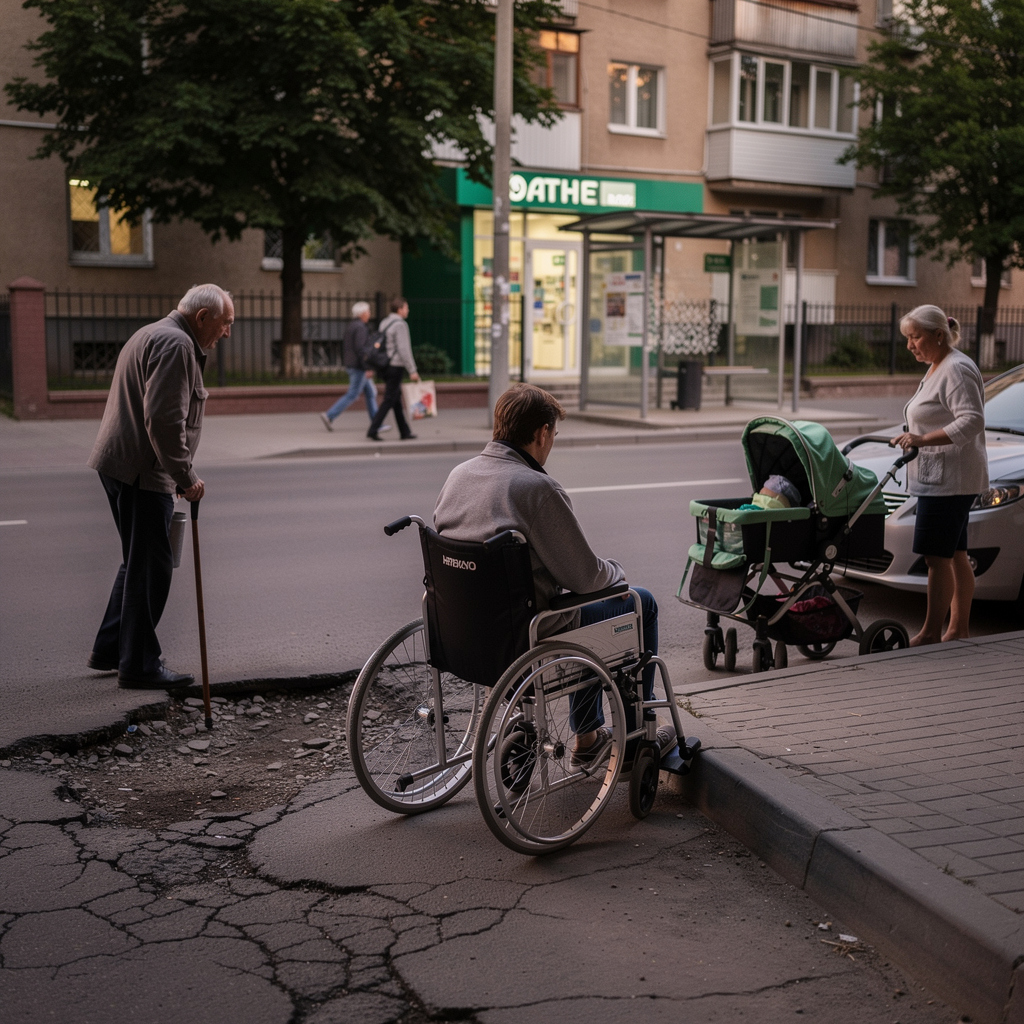
For one person, this is a routine step off the curb; for another, it is the end of their route.
Beyond the curb, you can see a pharmacy, a bus stop, or a neighboring courtyard. Everything is close by, but getting there independently is impossible. The city seems to leave the door ajar while placing an invisible bolt across the passage.
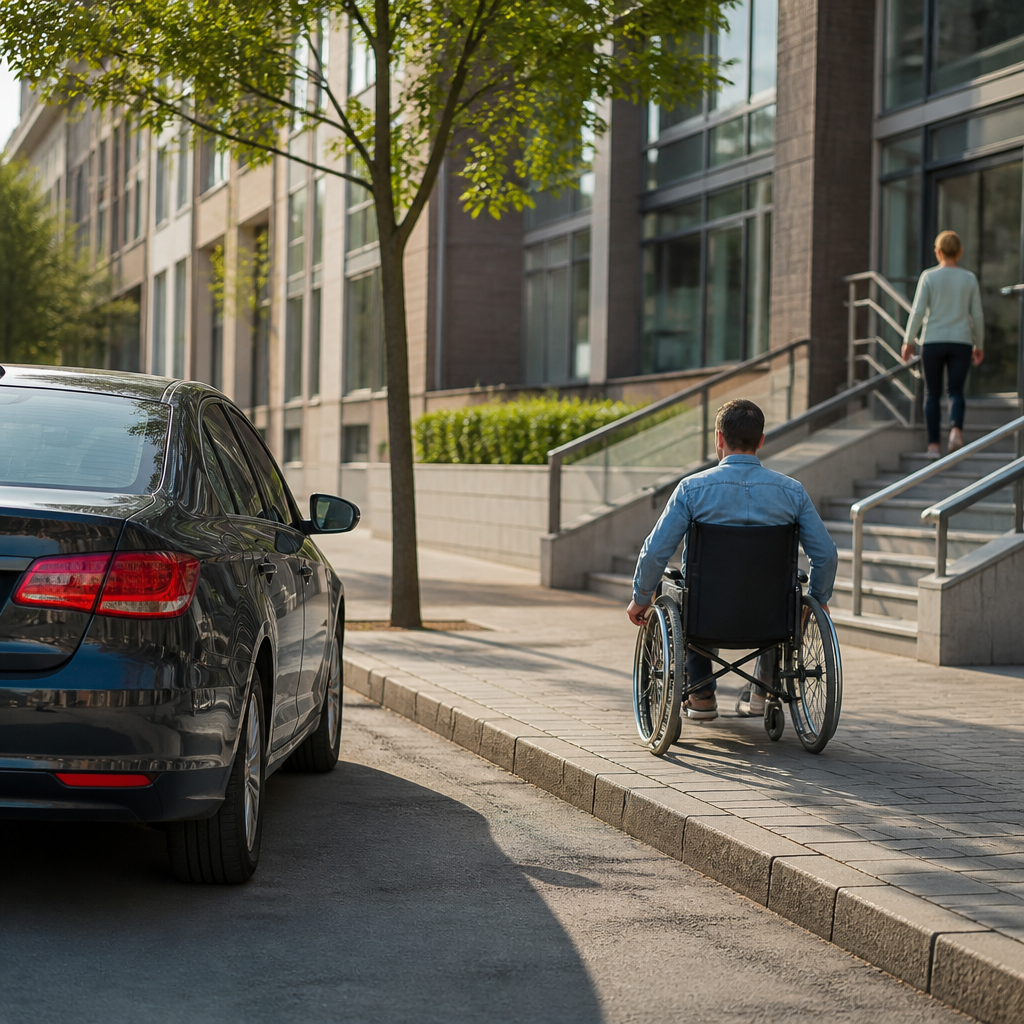
To understand how this bolt works, simply imagine a person who uses a wheelchair. They first plan the route in their head: where they can roll down, whether a car has blocked the path, if they can navigate around broken tiles or damaged asphalt. The choice begins with the question of whether a passable route even exists.
Such a road gradually changes life itself. Meetings must be rescheduled, walks abandoned, and doctor visits coordinated with someone who can accompany them. We are used to discussing potholes as a flaw in urban maintenance. But a crack in the asphalt can interfere with work, treatment, and friendship no less than the most malicious enemy. A small section of street gains power over major human decisions.
This power is especially noticeable where unevenness that is familiar to most becomes a serious obstacle. A wheel gets stuck in a pothole, a cane tip falls into a gap, and walkers lose stability. It is difficult for a person with visual impairment to detect a drop in advance, or for an elderly pedestrian to maintain balance and find the strength to detour. The same sidewalk offers people vastly different degrees of freedom.
The circumstances of limited mobility also vary, such as disability, temporary injury, age-related restrictions, or the need to push a stroller. However, in all these cases, the design of the street can turn a simple task into an operation involving relatives and random passersby. Where there should be the opportunity to walk calmly, there arises a need to negotiate, wait, and ask for help.
This dependence has a material side. Taking a detour and using transport instead of a short walk requires personal time; accompaniment requires free hours from another person. Thus, an invisible accounting of inaccessibility emerges. It is rarely considered when discussing street repairs, although residents pay these costs daily with their own resources.
Sometimes the bill turns out to be particularly heavy. Impacts on the edges of potholes, wheels getting stuck, and overcoming high curbs can accelerate wear and lead to breakdowns of mobility aids. The wheelchair, on which a person’s independence depends, itself becomes vulnerable to the urban environment. An unsuccessful stretch of road can end with a search for spare parts and a repair shop.
This search is followed by expenses: parts, specialist labor, and delivery of the device for repair. For a low-income family, such a necessity can become an unbearable burden. Money must be found among sums set aside for groceries, medicine, and utility bills. While the wheelchair is broken, the person may lose the ability to leave the house. The family pays for the flaws of the public street with their own funds, and their loved one is forced into days of isolation.
The experienced breakdown remains with the person even after repair. Before the next outing, one must assess whether the wheels will hold, if it will be possible to bypass the pothole, and if help will be available. Even a familiar route does not guarantee peace of mind. Yesterday the passage was clear; today it is blocked. In the morning, the puddle could be avoided; in the evening, it hid the edge of the pothole. The everyday road requires constant readiness for trouble.
This is precisely why the conversation about mobility cannot be reduced to the physical capabilities of the individual alone. The World Health Organization views disability as an interaction between health conditions and surrounding environments. An inaccessible environment limits full participation in public life. This allows us to see poor sidewalks as one of the barriers that society is capable of removing.
From this follows a different scale of responsibility. The right to education implies the possibility of attending classes; the right to work implies reaching the workplace. Access to medical care depends, among other things, on the road to the clinic. Between the recorded right and its realization lies a quite tangible distance from the entrance to the bus stop, from the crosswalk to the front door.
Article 9 of the UN Convention on the Rights of Persons with Disabilities enshrines this connection. It provides for measures by States Parties to ensure accessibility, including identifying and eliminating obstacles, and explicitly covers roads and transportation. Accessibility is viewed as a condition for independent living and full participation in it.
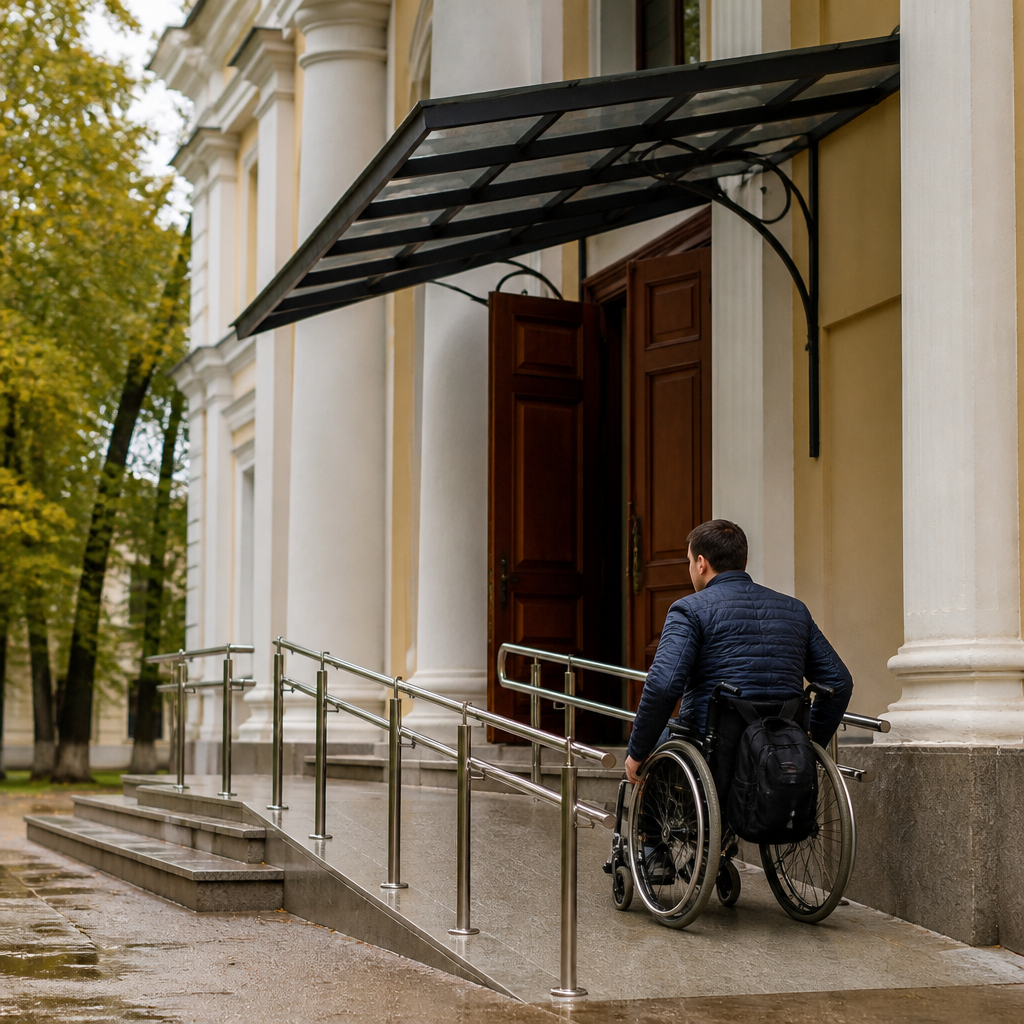
In practice, this condition is met only when the entire route is accessible. Between a convenient driveway and an adapted bus, there may be an impassable block. A single high curb can negate the benefit of all other improvements. Therefore, isolated ramps do not yet provide grounds to consider the city open to everyone.
This openness can be tested with a simple example. A person is invited to a city festival, but can they get there and return home independently? The answer shows how feasible the invitation is. In this context, inclusion takes on specific content: the opportunity to participate by one’s own will, without humiliating negotiations with every obstacle.
Ensuring this opportunity is not easy. Municipal services often have limited budgets, emergency sections, and accumulated problems. But it is precisely these constraints that require clear priorities: for example, which route will be made safe first, who is responsible for the work, and when residents will see results. Without these answers, waiting becomes indefinite.
And indefinite waiting has a human cost. While a known barrier remains in place for years, some residents continue to use the city, while others pay for detours, repair wheelchairs, or stay home. The ethical problem arises in the distribution of these losses themselves. Inaction hits hardest those who have fewer opportunities to compensate for it.
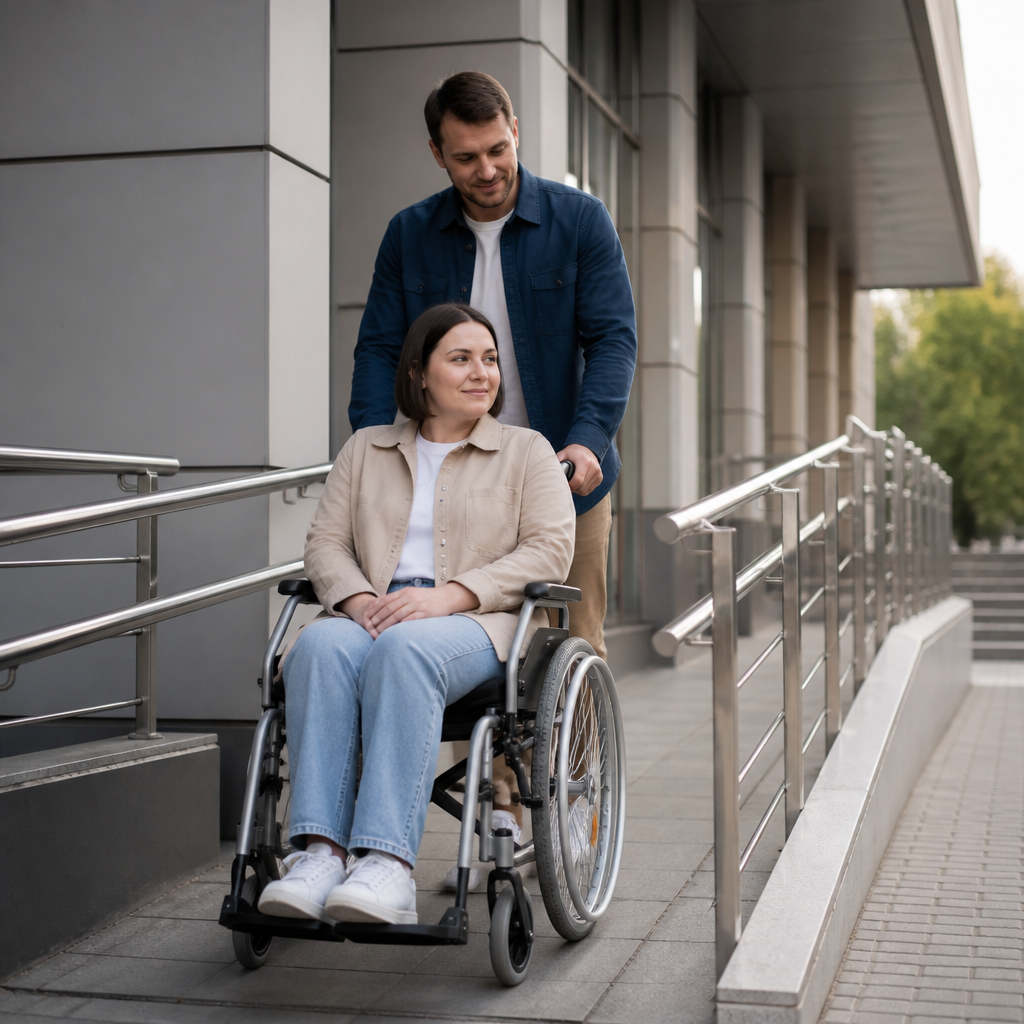
Compensation often comes in the form of someone else’s kindness. A passerby helps lift the wheelchair, a neighbor accompanies the person to the store, a relative changes their plans. Such support is valuable. However, a person must retain the right to go "for bread" without searching for an assistant. Dignity is linked to the ability to decide for oneself when to go out, where to head, and whom to ask for involvement.
When such an opportunity is absent, people become less visible on the streets. And here a dangerous cycle emerges: the absence of residents with limited mobility is taken as an absence of demand for accessibility. But an empty sidewalk says nothing about those who could not access it. You cannot judge the need for a bridge by the number of people willing to swim across the river.
This cycle can be broken if we start listening to those whose routes are currently cut short. Roads to stops, shops, schools, and clinics should be inspected together with people with various disabilities and other residents with limited mobility. Their experience helps identify obstacles that are invisible when inspecting from a car and determine truly necessary work.
A good sidewalk rarely becomes a tourist attraction. Yet thanks to it, a person arrives at work, meets friends, and chooses their walking time themselves. A family does not have to find money for wheelchair repairs after yet another pothole. Inclusion lives in these ordinary things: the ability to leave the house and reach your destination without humiliating waits before the curb.
Who is affected
Людей, использующих кресла-коляски, трости, костыли и ходунки; людей с нарушением зрения; пожилых жителей; тех, кто восстанавливается после травм и операций; родителей с детскими колясками. Недоступная среда затрагивает и их близких: сопровождение, дополнительные поездки и ремонт средств реабилитации требуют времени и семейных денег.