Sociologists: Well-being of the Rural Elderly Depends on Infrastructure and Neighborhood Support
Aging in Place: The Harsh Reality of Growing Old in the Russian Hinterland
Sociologists from the St. Petersburg Branch of the Sociological Institute of the Russian Academy of Sciences, supported by the Russian Science Foundation, have studied the daily practices of elderly residents in Northwestern Russia. The large-scale study, covering Karelia, Leningrad, and Novgorod regions, was conducted from 2024 to 2026.
Drawing on surveys of 200 pensioners and dozens of in-depth interviews with rural residents themselves, their relatives, medical professionals, and social workers, researchers Oksana Parfenova and Irina Petukhova investigated how demographic aging specifically transforms lives in remote settlements. They demonstrated that well-being in old age depends not on the date of birth in one's passport, but on a fragile balance of health, infrastructure, and neighborhood mutual aid.
Functionality Over Age
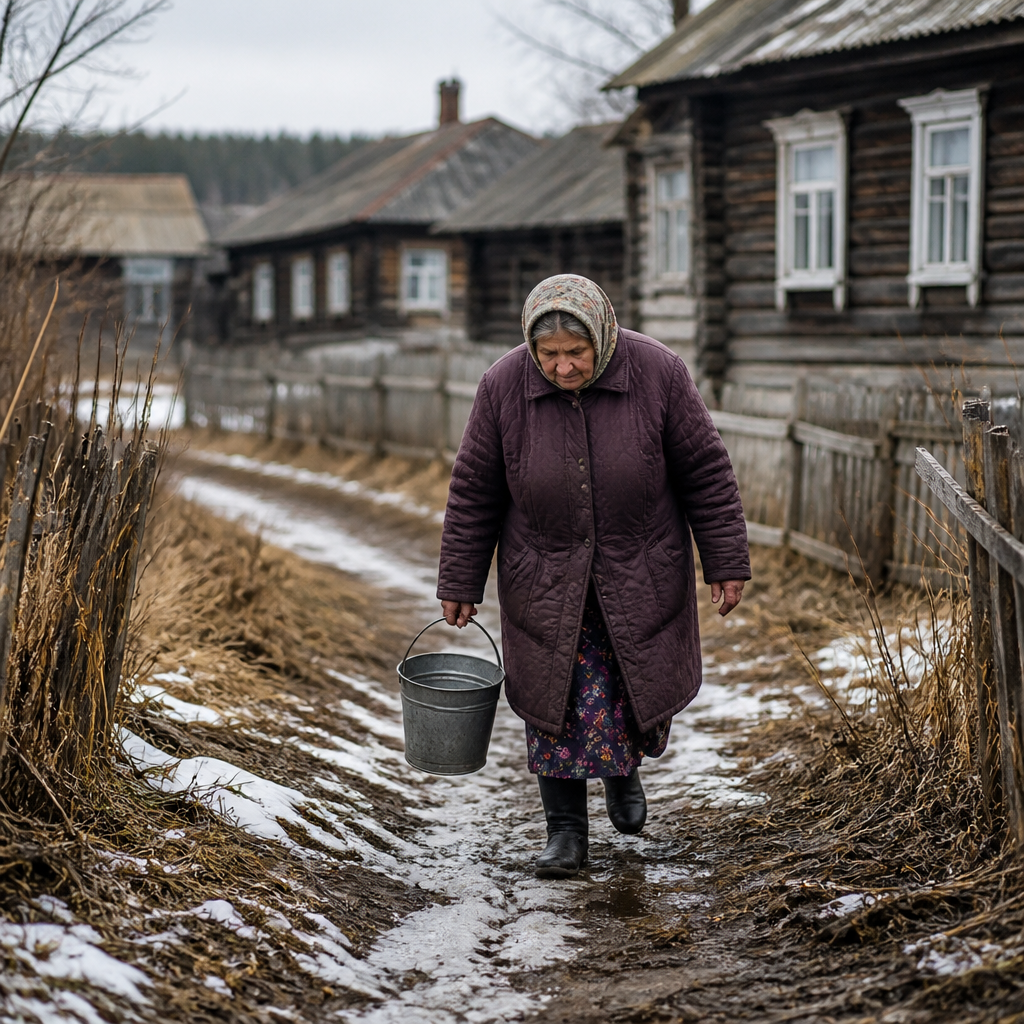
A common stereotype associates old age exclusively with the biological clock and an inevitable burden on the state. However, field data show the opposite: the autonomy of rural pensioners is based on resource and infrastructure factors. The elderly themselves assess their condition through their ability to perform daily tasks: chopping wood, carrying water, or getting to a bus stop. As physical strength declines, a person's world shrinks from the vegetable garden to the walls of the house, and sometimes to the size of a single room. In such moments, the immediate environment plays a critical role: the presence of a working paramedic, a social worker, or simply a stove that can be lit independently. This is why two 75-year-old women can have radically different life trajectories, even living in neighboring settlements.
Healthcare on the Map and in Reality
Formal reporting often paints a favorable picture, marking paramedic and obstetric centers and outpatient clinics on maps. In practice, however, these facilities may sit idle due to staff shortages or operate only a couple of days a week. The local paramedic becomes the actual lifesaver in such conditions, taking on logistics: organizing transport to specialists and coordinating medical calls. Access to emergency care remains a lottery: in some places, the medical team arrives promptly, while in others, trips to the doctor are hindered by destroyed bridges, seasonal mud, or inter-district bureaucratic barriers. Facing such obstacles, pensioners develop survival strategies, delaying doctor visits until their condition becomes critical and resorting to self-medication.
The Burden of Elder Care
The burden of elder care in the countryside almost never falls on a single institution. Researchers have documented the formation of resilient support networks where the efforts of relatives, neighbors, volunteers, and social workers intertwine. A neighbor's shoulder often substitutes for absent state services, providing grocery delivery or household help. The state, in turn, is beginning to test new formats, such as the "Caring Neighbor" program, which provides payment to local residents caring for the elderly. Another compromise between the desire to stay in one's own home and the need for safety is boarding houses with seasonal residence: elderly people spend the harsh winters there, returning home in the spring.
Spatial Trap and Memory of Place
The concept of aging in place, popular in global sociology, takes on dramatic shades in the Russian context. For a rural resident, a home is not just a roof over their head, but the center of the universe, holding the memory of ancestors and decades of life. Moving to a care home or to children in the city is perceived as a loss of identity. At the same time, pensioners who have watched the local environment degrade for decades painfully note the closure of schools, the cancellation of bus routes, and the shutdown of shops. What officials call optimization becomes a gradual erasure of familiar anchor points for the elderly.
A Test of Maturity
Demographic trends are relentless. Due to the outflow of young people, the proportion of elderly residents in rural areas is growing faster than in megacities. The aging of the periphery becomes a litmus test for the resilience of the state's transport, healthcare, and social systems. Mature policy must abandon the formal counting of buildings on maps in favor of assessing the actual accessibility of services. The integration of mobile services, the development of seasonal facilities, and the strengthening of neighborhood ties will help turn forced isolation into a comfortable environment. After all, if we do not learn to support those who are now meeting old age in remote villages, tomorrow each of us risks finding ourselves at the edge of civilization.
Who is affected
Существующие барьеры связанные с доступностью транспорта и медицинских услуг напрямую ограничивают мобильность и самостоятельную жизнь в селе, превращая бытовые задачи в непреодолимые препятствия.