Overcoming Shame and Internalized Ableism
This article explores internalized ableism, a phenomenon where society's negative perceptions of disability are absorbed by both people with and without disabilities.

Overcoming Shame and Internalized Ableism
Disability is a natural part of the human experience, and anyone can become disabled at any point in their life. Yet society too often views disability as a flaw to be fixed, hidden, or overcome. Over time, these ideas seep into our consciousness, shaping our attitudes toward disability, ourselves, and others. People with disabilities may begin to view themselves or the disability community as inferior, defective, or burdensome. People without disabilities can also internalize these ideas, forming biased opinions and fears about disability that affect how they view themselves and those around them. This is internalized ableism-a force that subtly influences daily life: the careers people choose or abandon, the medical care we delay, the relationships we avoid, the risks we never take, and the opportunities we deem ourselves unworthy of.
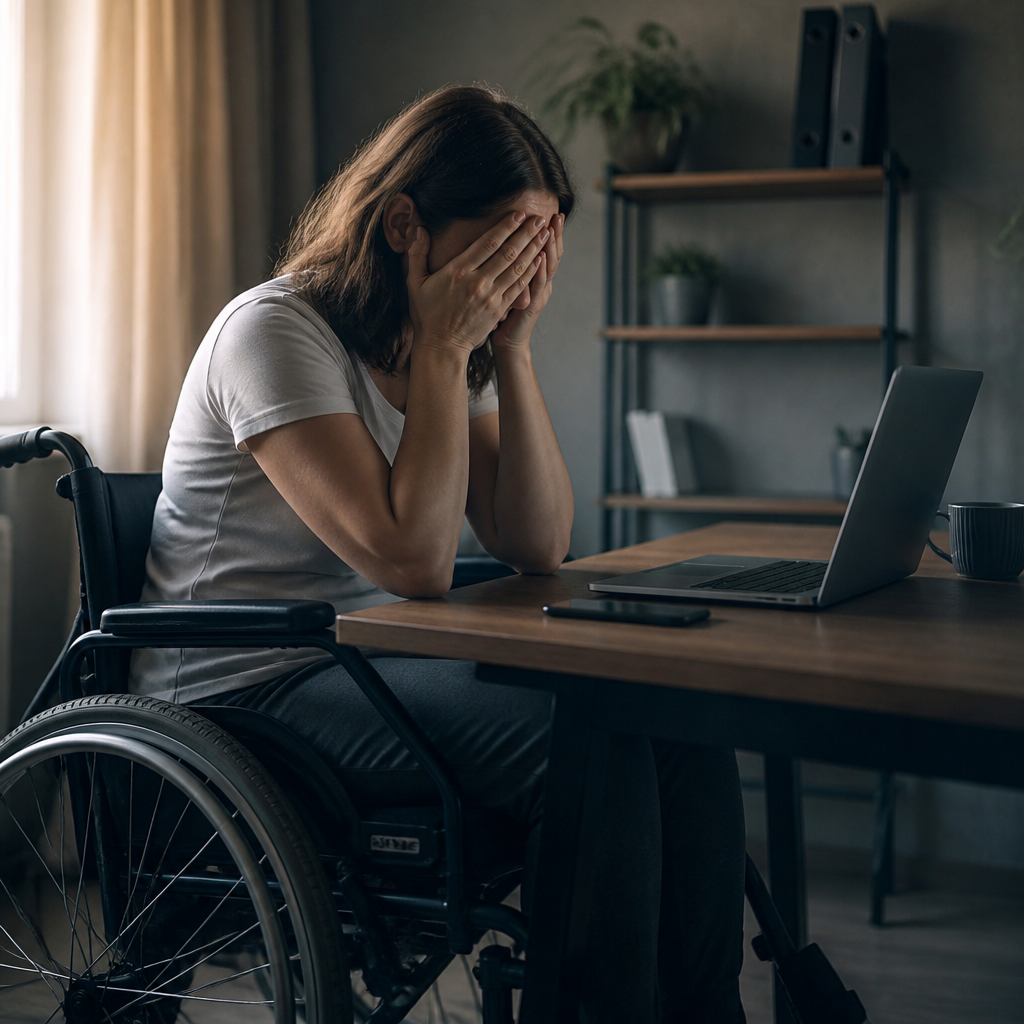
Consider: what part of your life would remain untouched by the belief that a core part of your identity must be controlled or hidden? When identity itself is framed as something wrong, shame takes root in the soul. People withdraw, doubt their worth, hide their disabilities, avoid support, or push beyond reasonable limits to prove they belong. External stigma turns into an internal struggle. If left unchallenged, shame becomes a self-perpetuating cycle that restricts lives.
This vicious cycle can be broken, as countless people with disabilities and communities have proven by reclaiming pride, advocating for accommodations, and transforming the systems that once excluded them. The prevalence of disability and the universal nature of aging make this work urgently relevant. According to 2022 CDC data, more than one in four adults in the U.S. lives with a disability, exceeding the share of Americans living in rural areas (one in five). As the population ages, disability becomes increasingly common: in 2022, 43.9% of American adults aged 65 and older had a disability, according to the CDC.
Internalized ableism manifests in everyday decisions: the nurse who continues working through pain instead of asking for lighter duties; the student with a disability who hides their need for support to avoid stigma; the employee who overexerts themselves and downplays accessibility barriers to appear "capable." These are not personal failures. They are rational responses to systems that dictate whose bodies and minds are considered normal, productive, and worthy. Media, education systems, and workplaces guided by narrow definitions of success reinforce the tendency to mask, downplay, and endure. Internalized ableism does not develop in isolation; it thrives in environments that deny people with disabilities the opportunity to fully express themselves.
Shame changes how people interact with the world: it undermines self-confidence, limits career choices, damages relationships, and sometimes harms mental health. It conditions people to expect rejection before it even happens. This lesson is a false one.
As Dr. Brené Brown writes in her "Belonging Statement": "Shame is a tool of oppression."
Shame does not belong to people with disabilities. It belongs to the systems that discriminate against them, the environments that deny them access, and the policies that sustain inequality. We must transform this shame into accountability, solutions, and collective action that make access, dignity, and equality the norm, not the exception.
Fostering disability pride begins with fundamentally changing our understanding of disability: not as a defect to be overcome, but as an identity, a culture, a part of the human experience, and a source of innovation and leadership. Self-acceptance should never require courage, nor should asking for access. Reasonable accommodations in workplaces, schools, and public life are civil rights guaranteed by the Convention on the Rights of Persons with Disabilities. Access is a civil right, not a favor.
This reframing also requires overcoming the false divide between communities of people with and without disabilities. Society's expectations of people with disabilities remain narrow and outdated. Meanwhile, across all industries, professionals, creators, parents, athletes, and leaders with disabilities are actively thriving. Their success should be seen as ordinary and expected, not exceptional or inspirational. The true deviation from the norm is not that people with disabilities succeed, but that barriers to basic access in transportation, education, healthcare, housing, and employment still exist.
Pride is not about denying barriers. It is about rejecting narratives that frame disability as a problem. Authentic representation shifts public perceptions of what is possible. When the lives of people with disabilities are portrayed fully and realistically-not as tragedy or triumph, but as ordinary human experience-stigma loses its power, and equality becomes real.
Creating long-term change in attitudes toward people with disabilities requires coordinated action across culture, policy, and everyday practice. Six steps can accelerate this change:
- normalize discussions about accessibility without apology;
- confront limiting narratives in families, schools, cultural institutions, and workplaces; invest in communities where disability is respectfully represented and valued;
- make self-advocacy a sustainable practice, not a heroic act;
- embed accessibility into systems from the very beginning;
- prioritize the leadership and lived experience of people with disabilities in decision-making and innovation processes.
Eliminating entrenched ableism is a shared responsibility. It requires intentional planning, accountable leadership, and sustained investment in accessibility and equality. Every barrier removed, every policy strengthened, and every disabled leader whose role is amplified brings us closer to a society where people with disabilities are fully included and valued. Shame is a sharp and powerful emotion. When we redirect its energy toward ensuring access, dignity, and justice, it becomes a driving force for building a world we can all be proud of.
Who is affected
Эти представления в конечном итоге формируют выбор профессии, обращение за медицинской помощью, отношения, которые люди строят, и риски, на которые они готовы пойти.