Eurostat names EU countries with worst quality of life indicators for people with disabilities
Geography of inequality: Which EU countries are the hardest to live in for people with disabilities
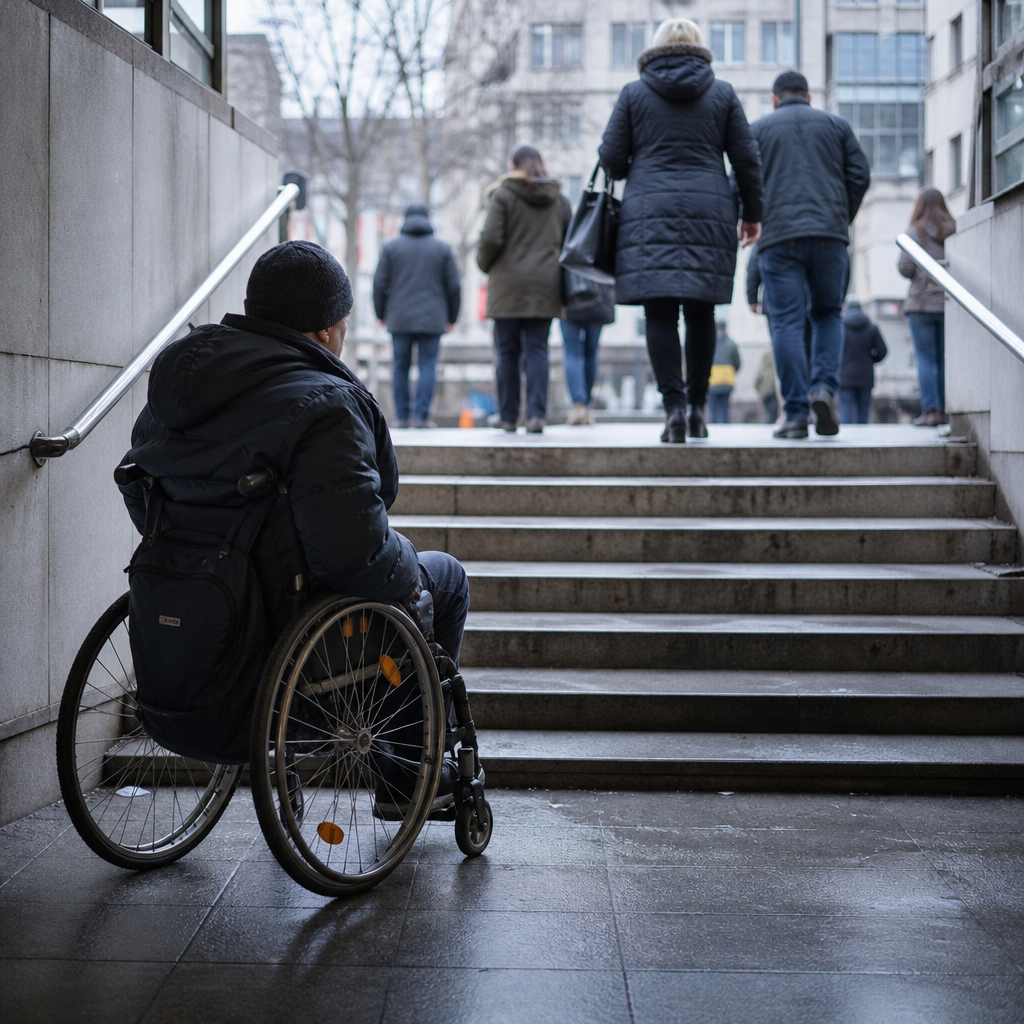
The quality of life for citizens with disabilities in the European Union is directly determined by their place of residence, turning basic social guarantees into a kind of lottery. According to an analysis by the European Statistical Office covering economic and everyday realities, conditions remain critical in several member states. Researchers have identified the countries with the worst indicators across four key areas, demonstrating a massive gap between people with disabilities and the rest of the population.
Financial vulnerability and the threat of poverty
On average across the European Union, 28.8% of citizens with disabilities aged over 16 are at risk of poverty and social exclusion. However, in certain member states, this indicator significantly exceeds the EU-wide average. Lithuania is the absolute worst performer, where half of all people with disabilities-specifically 50.5%-face poverty, compared to 21.9% among the population without disabilities. Countries with elevated financial risk also include Latvia at 42.6% versus 18.1% for their peers without disabilities, Bulgaria at 42.3% versus 26.6%, Croatia at 39.8% versus 15.6%, and Romania at 37% versus 23.2%.
Inability to cover basic expenses
The ability to cover necessary expenses with available income remains a pressing issue. While across the bloc 9.1% of people with disabilities and only 5.2% of citizens without disabilities face such difficulties, in some regions the gap reaches catastrophic proportions. The situation is worst in Greece: 46.3% of citizens with disabilities cannot afford what they need, compared to 32.3% of their peers without disabilities. Rounding out the bottom five are Bulgaria, where 19.4% versus 9.7% cannot manage their expenses, Portugal at 13.9% versus 6.7%, Romania at 13.8% versus 7.6%, and Spain at 12.4% versus 6.9%.
Shortage of accessible healthcare
The healthcare system also demonstrates significant inequality. Across the EU as a whole, 4.8% of people with disabilities report unmet needs for medical care, compared to 1.6% among the rest of the population. The most critical figures were recorded in Greece, where 32.9% versus 6.9% cannot get the care they need. Residents of Finland, Latvia, Estonia, and Romania also face substantial problems accessing healthcare: 14.7% versus 4% in Finland, 14.1% versus 4% in Latvia, 12.9% versus 5% in Estonia, and 9% versus 1.3% in Romania.
Early school leaving
Young people with disabilities are significantly more likely to drop out of education. In 2024, among Europeans aged 18 to 24 who had not completed compulsory schooling, the share of people with disabilities reached 24.8%, compared to 8% for their peers without health impairments. The countries with the highest rates of such early school leaving are Romania at 61.6% versus 16.1%, Greece at 58.8% versus 1.2%, Bulgaria at 54.3% versus 8%, Lithuania at 42.5% versus 6%, and Hungary at 41.2% versus 9.5%.
Thus, place of residence within the European Union continues to dictate basic opportunities for citizens with disabilities. The gap in living standards, healthcare access, and education identified by the European Disability Forum requires systemic solutions. As long as geography continues to determine survival conditions, it turns basic rights into a privilege dependent on crossing national borders.
Who is affected
Системное неравенство и высокие риски бедности, недоступность медицины и образования для людей с инвалидностью в ЕС.