The Power of Equine Contact: How Hippotherapy Helps Children with Autism Reduce Hyperactivity and Build Social Skills
Findings from a large-scale study published in the peer-reviewed medical journal Pediatrics provide parents and professionals with new evidence supporting the inclusion of hippotherapy in comprehensive rehabilitation programs.
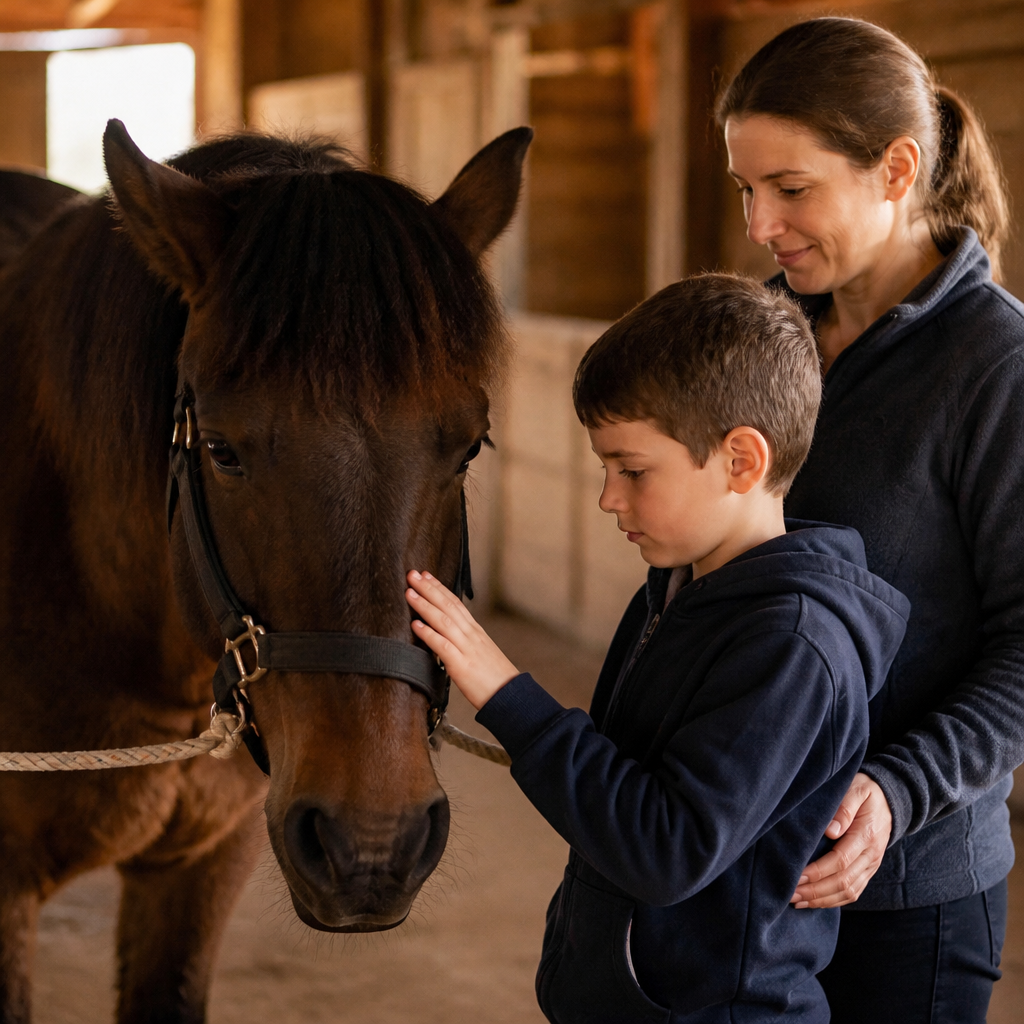
New scientific evidence confirms that horseback riding, and even simply spending time around horses, can be a powerful tool for supporting children with autism spectrum disorder (ASD). The study demonstrated a significant reduction in hyperactivity and improved emotional regulation among the young participants.
How was the study conducted?
The study involved 236 children aged 6 to 16 diagnosed with autism and co-occurring developmental conditions. To ensure the integrity of the experiment, the children were divided into several groups:
The first group participated in therapeutic horseback riding once a week for 10 weeks.
The second group visited the stable and participated in group horse care activities but did not ride.
The third group was initially placed on a waitlist for five weeks, after which they also completed a five-week horseback riding program.
What were the results?
Researchers observed a significant reduction in irritability and hyperactivity among both the children who rode the horses and those who simply interacted with them on the ground. Improvements were also noted in social behavior and the ability to regulate emotions. However, horseback riding proved to be the most effective intervention specifically for reducing hyperactivity.
"There is something particularly beneficial about horseback riding for children with hyperactivity," notes Robin Gabriels, a professor of psychiatry at the University of Colorado who led the study. "Working with horses gives these children the opportunity to participate in an active, social, and engaging activity. For some, it becomes a highly effective way to develop skills that are difficult to teach in a traditional clinical setting."
Tip: Before starting lessons, be sure to visit the stable with your child to assess their reaction to the smells, sounds, and the animals themselves. A gradual approach and the child's comfort should always be the top priority.
Who is affected
Для ребенка с сенсорными особенностями или страхами, который пока не готов сесть на лошадь, расчесывание гривы или кормление уже является отличной стартовой точкой для развития эмпатии и мелкой моторики.